The Sahel Alliance

The Sahel Alliance is an international coordination platform bringing together 27 organisations and countries.
Founded in 2017, this initiative aims to provide more and better support for development initiatives in the Sahel.
The Sahel shows a striking paradox between the wealth of potentials and yet many challenges faced by its populations. The region is rich in natural resources such as oil, natural gas, gold, phosphates and minerals, and has some of the continent’s largest aquifers, as well as surface waters such as Lake Chad and the Niger River. These resources offer tremendous opportunities for economic diversification and the development of livelihoods. In addition, the Sahel has also great potential for renewable energies, and solar energy in particular. The region can also count on the dynamism of a particularly young population with a rich cultural heritage.
Yet the Sahel continues to face security challenges and major economic, social and environmental vulnerabilities. The situation is particularly critical in peripheral and cross-border areas. Pressure on natural resources is a recurring source of conflict between farmers and livestock herders. Despite rapid urbanisation, 64% of the Sahelian population lives in rural areas and depends mainly on agriculture and livestock income.
The region is also exposed to climatic and environmental hazards, with irregular rainfall, drought and recurrent flooding.
Lastly, economies are often characterised by a largely informal labour market, narrow tax bases, underdeveloped industrialisation, and a dominant agricultural sector with little focus on processing activities.
In this context, several development partners created the Sahel Alliance in 2017, a platform for coordinating development cooperation in the Sahel, to provide more and better support for development priorities of Burkina Faso, Mali, Mauritania, Niger, and Chad.
Since its launch, Germany, the World Bank, the African Development Bank, Canada, Denmark, the European Investment Bank, the European Union, France, Italy, Luxembourg, the Netherlands, Norway, Spain, Sweden, the United Kingdom, the United Nations, the United States, and the West African Development Bank have joined the initiative as full members.
Nine countries or organisations have joined the Sahel Alliance as observer members: Japan, Belgium, Switzerland, Finland, the International Finance Corporation, the Bill & Melinda Gates Foundation, the Tony Blair Institute for Global Change, Ireland and the Organisation internationale de la Francophonie.
In order to provide an appropriate response to the challenges facing the Sahelian countries, the Sahel Alliance members decided to guide their work according to the following principles:
- Targeting actions on priority sectors
- Mutual accountability between members and Sahelian countries
- Innovative and flexible approaches, adapted to the constraints and specificities of the field and a diversification of the stakeholders implementing them
- A stronger commitment in the most vulnerable and fragile areas, through the Integrated Territorial Approach
These principles aim to improve coordination and coherence between the Sahel’s development partners, and increase the effectiveness and impact of financed projects in order to achieve sustainable improvements in the living conditions of populations, particularly the most vulnerable.
Fields of action
In order to provide an effective and structured response to the challenges face by the Sahel countries, the members of the Sahel Alliance have chosen to concentrate their efforts on priority sectors, which correspond with the development priorities established by the Sahel countries.
-
 Agriculture, rural development and food security
In the Sahel region, two out of three inhabitants live off agriculture and breeding livestock. However, yields are low and over a third of crops are lost every year, so food insecurity is high and this situation is worsened by climate change. One of the Sahel Alliance’s priorities is the development of sustainable agriculture that is climate-resistant and able to reduce poverty and malnutrition.
-
 Decentralization and basic services
Access to drinking water, primary health care or social protection is still limited in the Sahel region, especially outside large cities. The region is also marked by a high rate of infant mortality. Bringing administrations closer to their citizens means decentralization, thanks to the transfer of budgetary management to local authority level. The Sahel Alliance is committed to reinforcing the needs of local authorities in terms of providing basic services.
-
 Education and youth employment
The birthrate remains high in the Sahel countries, while life expectancy is increasing. Creating economic opportunities for the population and, first and foremost, for young people, is a priority for the Sahel Alliance. This calls for more generalized access to teaching and job opportunities.
-
 Energy and climate
There is an electrification rate of around 20% in all the Sahel countries; this is four times lower than the global average and two times less than the average of countries in Sub-Saharan Africa. Public action and innovation can help to reduce this gap. Since the region enjoys plentiful sunshine, the Sahel Alliance intends to increase the number of people with access to reliable, affordable and renewable electricity.
-
 Governance
The Sahel countries face a lack of institutional, territorial and financial governance. Citizens are demanding more justice and wish to participate more in the democratic life of their country. A combination of administrative hold-ups, corruption and poor resource redistribution means that citizens have little confidence in their government. Reinforcing the social contract in the Sahel countries is a goal for the Sahel Alliance.
Members
-
Germany — Federal Ministry for Economic Cooperation and Development (BMZ)
Tasked with German development policy, the Federal Ministry for Economic Cooperation and Development negotiates with almost 80 countries in terms of bilateral cooperation and works with international organizations to develop multilateral cooperation. The 2030 Agenda for Sustainable Development adopted by the United Nations constitutes the international framework for Germany’s development policy. The BMZ is particularly focused on creating better opportunities in refugees’ countries of origin and is committed to working towards global food security, sustainable economic development and global climate action.
Federal Ministry for Economic Cooperation and Development (bmz.de)
-
European Union
The member States of the European Union have decided to gradually pool their expertise, their resources and their destiny. Together, they have constructed an area of stability, democracy and sustainable development while preserving their cultural diversity, tolerance and individual liberties. The European Union believes in sharing its accomplishments and values with the countries and people beyond its borders.
-
World Bank
With 189 member countries, staff from more than 170 countries, and offices in over 130 locations, the World Bank Group is one of the world’s largest sources of funding and knowledge for developing countries. The World Bank Group’s mission consists of two ambitious, but achievable, goals: to end extreme poverty by 2030 and to boost shared prosperity.
-
France — Agence Française de Développement (AFD)
AFD is France’s inclusive public development bank. It commits financing and technical assistance to projects that genuinely improve everyday life, both in developing and emerging countries and in the French overseas territories. Its action is fully in line with the Sustainable Development Goals (SDGs). Through its network of 85 agencies, AFD operates in 109 countries, where it is currently financing, supervising and supporting over 3,600 development projects
-
African Development Bank
The African Development Bank Group comprises three legally independent entities that share a common goal: the African Development Bank, the African Development Fund and the Nigeria Trust Fund. It has 80 shareholders, including 54 African and 26 non-African States. In 2015, President Akinwumi Adesina defined five strategic priorities for the Group: Light up and power Africa; Feed Africa; Industrialise Africa; Integrate Africa; and Improve the quality of life for the people of Africa. This financial institution fights against poverty and promotes sustainable economic growth. At the end of 2017, the Group had approved a cumulative total of US$145.55 billion for the benefit of 5,528 investments in projects.
-

United Nations
The United Nations, through the Office of the Special Coordinator for Development in the Sahel. The Office of the Special Coordinator for Development in the Sahel is responsible for coordinating collective efforts, including funding, to implement the UN Integrated Strategy for the Sahel and its support plan. The aim is to intensify the UN development response in the Sahel, also by engaging and supporting the efforts of regional partners and organizations in the region, including the Sahel Alliance.
-
Italy — Italian Development Cooperation (CIS)
-
Spain — Spanish Agency for International Development Cooperation (AECID)
Since 1988, the AECID has been the managing body for Spanish international development cooperation, with the goal of fighting poverty and promoting sustainable human development. Together with its partners, the Agency works in over 30 countries through its network, made up of technical cooperation offices, cultural centers and training centers. The Agency works under the aegis of the Spanish Ministry of Foreign Affairs and Cooperation and its instruments include technical, economic and financial cooperation, humanitarian aid and education for sustainable development and social awareness.
-
United Kingdom — Department for International Development (DFID)
The Department for International Development (DFID) leads the UK’s work to end extreme poverty. Its action aims to tackle the global challenges of our time including poverty and disease, mass migration, insecurity and conflict. Its work is building a safer, healthier, more prosperous world for people in developing countries and in the UK too.
-
Luxembourg — Ministry of Foreign and European Affairs
The Ministry of Foreign and European Affairs coordinates the Luxembourg government’s external action and endeavors to promote a coherent approach towards diplomacy, defense, development and immigration while supporting Luxembourg’s interests abroad. Development cooperation is an integral part of Luxembourg’s foreign policy and is firmly committed to eradicating poverty, especially in the least developed countries.
-
Denmark
-
Netherlands
-
European Investment Bank
The European Investment Bank is the lending arm of the European Union. We are the biggest multilateral financial institution in the world and one of the largest providers of climate finance.
The EIB Group has two parts: the European Investment Bank and the European Investment Fund. The EIF specialises in finance for small businesses and mid-caps. We lend to the public and private sectors. We support small companies through local banks and lend money to innovative start-ups. Mid-cap companies can receive direct support for research and development investments.
-
Norway
The strategy for Norway’s efforts in the Sahel region (2018–2020) has provided a framework for strengthening Norwegian efforts during this period.
The strategy defines three primary objectives for Norwegian efforts in the Sahel region:
1. to promote conflict prevention and conflict resolution;
2. to promote political stabilisation and enhance security;
3. to build resilience and lay the foundation for inclusive economic, social and political development, with a view to improving living conditions and reducing the need for humanitarian aid. et politique inclusif, en vue d’améliorer les conditions de vie et de réduire la nécessité de l’aide humanitaire. (more info) -
Belgium
Observer member
-
USA
-
Canada
-
Japan
Observer member
-
Switzerland
Observer member
-
Finland
Observer member
-
International Finance Corporation
Observer member
-
Bill & Melinda Gates Foundation
Observer member
-
Tony Blair Institute for Global Change
Observer member
-
-
Organisation internationale de la Francophonie
Observer member
-
Sweden
Sweden is heavily engaged in the Sahel. In the area of development cooperation, Sweden’s thematic priorities include human rights and gender equality, democracy and good governance, environmental sustainability and climate change, conflict prevention. (More information)
-
West African Development Bank
The West African Development Bank (WADB) is the joint development finance institution of the States of the West African Monetary Union. It was created by an agreement signed on 14 November 1973. BOAD became operational in 1976. The member states are: Benin, Burkina Faso, Côte d’Ivoire, Guinea-Bissau, Mali, Niger, Senegal and Togo. www.boad.org/en
Sahelian partners
-
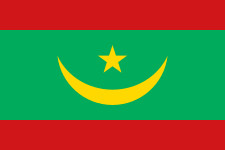
Mauritania
Located in Western Africa, Mauritania spreads over a surface area of one million km² and has an estimated population of 4.9 million inhabitants (2023) and a population density of 5 inhabitants per square kilometre. It is one of the least densely populated countries in Africa. More than half of Mauritanians (61.2%) live in urban areas (2023). The capital of Mauritania is Nouakchott. Real GDP growth is estimated to have slowed from 6.4% in 2022 to 3.4% in 2023.
-
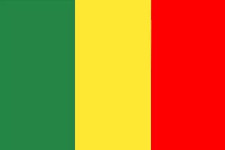
Mali
Mali is a landlocked Sahelian country with a surface area of 1.2 million km² and a population of 22.5 million inhabitants in 2022. GDP growth is estimated at 3.5% per annum in 2022. The Malian economy relies mainly on the mining and agricultural sectors. The capital of Mali is Bamako. The Sahelian regions in the north represent two–thirds of the territory and a tenth of the population is established along the River Niger. The majority of the population lives in rural areas. Strong demographic growth and climate change threaten agriculture and food security.
-
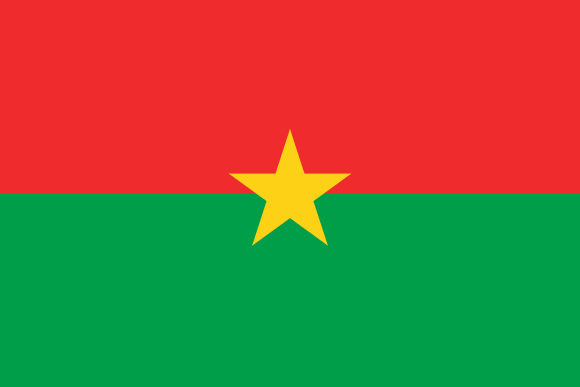
Burkina Faso
Burkina Faso is a Sahelian country with a surface area of 273,187 km² and an estimated population of over 22 million inhabitants. The capital of Burkina Faso is Ouagadougou. In 2023, the economy is expected to grow by 3.2%, compared with 1.5% in 2022. The country’s economy is dominated by agriculture and mining (particularly, gold). More than 40% of the population lives below the national poverty line.
-

Niger
Niger is a landlocked and semi-desert country with a surface area of 1.3 million km² and a population of over 26 million inhabitants (2022). The capital is Niamey. Economic growth in Niger is estimated at 1.2% in 2023. Its economy relies on agriculture (40%) and mining resources, particularly oil and uranium. The extreme poverty rate is expected to reach 52% in 2023.
-
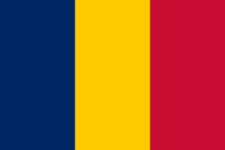
Chad
Located in the heart of Central Africa, Chad spreads over a surface area of 1.3 million km² with an estimated population of 17 million inhabitants (2022). The capital of Chad is N’Djamena. The Chadian economy is largely dependent on oil production, which enabled the country to experience a period of rapid growth until 2014. The Chadian economy relies on agriculture, services and the industrial sector. More than 40% of the population lives below the national poverty line.